Train Music
A romance of old missoula
A raw, intimate journey through Missoula, Montana, in 1969, where freedom, desire, music, rebellion, and loss collide.
Alma Mortimer arrives in Missoula with a typewriter, a desire to become a writer, and a determination to experience life beyond the boundaries she has always known.
What she discovers is a world far more complicated than she expected.
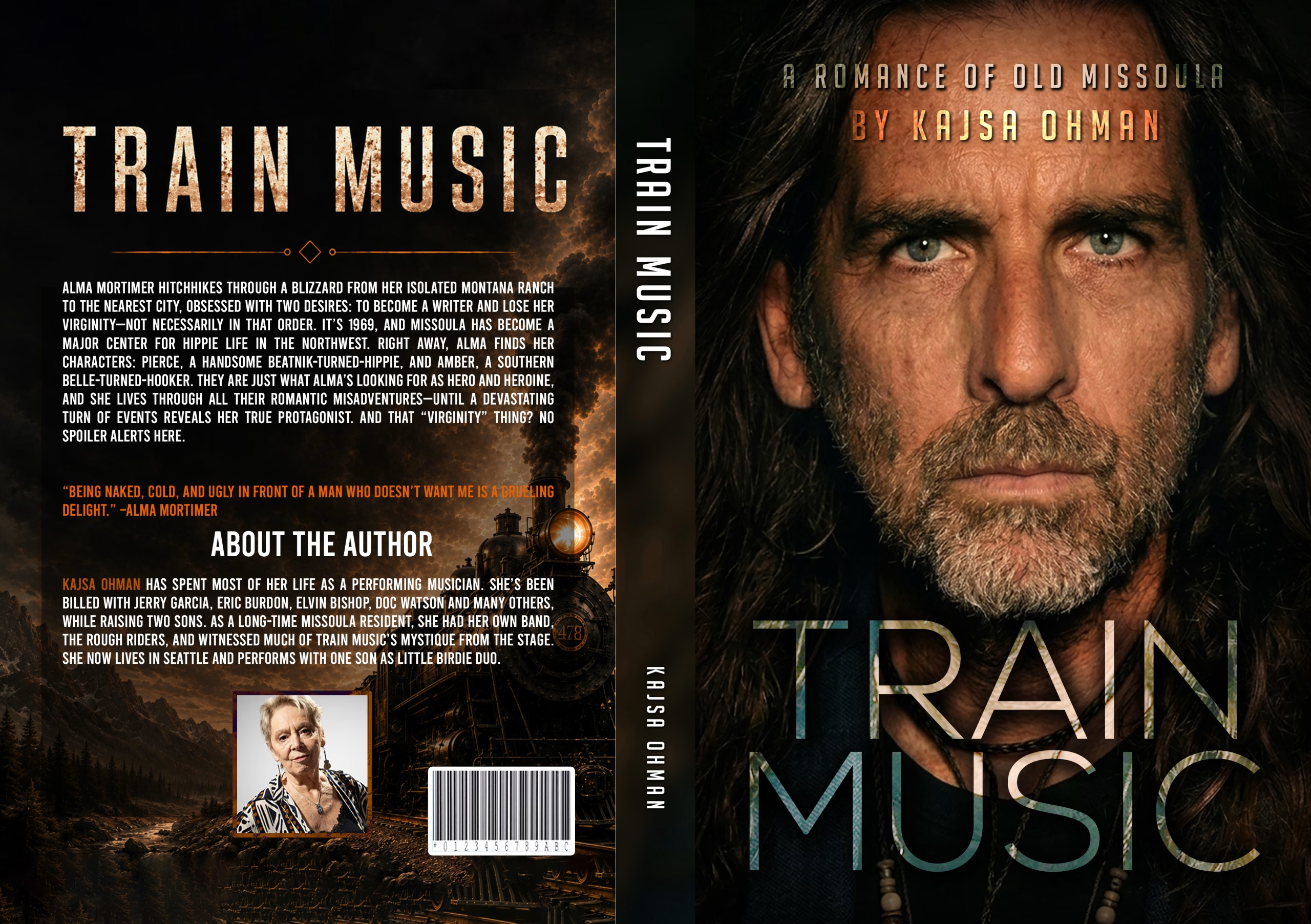

About Kajsa Ohman
AUTHOR. MUSICIAN. STORYTELLER
Kajsa Ohman’s Train Music is deeply connected to place, memory, music, literature, and the strange people and experiences that shape a life.
Through Alma Mortimer, Kajsa explores the relationship between storytelling and lived experience, asking what happens when a writer begins to realize that the people around her can become characters, memories can become stories, and life itself can become material for literature.
The book’s structure reflects that literary sensibility. Its 34 chapters carry titles drawn from well-known literary works, including You Can’t Go Home Again, The Portrait of a Lady, Crime and Punishment, The Naked and the Dead, and Gone with the Wind.
Kajsa’s writing brings together humor, observation, emotional honesty, cultural memory, and a fascination with the people who exist outside conventional boundaries.
Through Train Music, she invites readers not simply to remember an earlier Missoula, but to experience it.
Who Is Alma Mortimer?
Alma Mortimer is a young woman trying to become a writer while simultaneously discovering what it means to live.
She is observant, curious, sexually inexperienced at the beginning of the story, and increasingly willing to challenge the boundaries that have defined her life.
Her typewriter and notebooks become companions as she observes the people around her and tries to make sense of their lives.
But Alma gradually discovers that writing about life and actually living it are two very different things.
Her relationships with people such as Pierce, Amber, Andy/Pescati, and Les Moran force her to confront love, addiction, grief, sexuality, death, fear, and independence. The later chapters make clear that these relationships ultimately become part of Alma’s larger process of discovering herself
"Stories come from living—from the songs we hear, the people we love, and the paths we dare to take."